4i Roboticoding Education
Robotics & Coding Training
Training of Teachers & Learners for the 4IR
Integrating Coding & Robotics in the Curriculum
4IRoboticoding in Education is a leading provider of training in ROBOTICS and CODING, the “disruptive forces” that are reshaping and redefining education. Our experience in successful partnerships with firms in the Education sector means that we understand the challenges you face in your curriculum to integrate Coding and Robotics in the subjects, and deliver a project-based learning (PBL) approach yet reaching your high pass rate objectives.
Branches of Activities
This company is midwifing great strides in the business of 4IR, rolled out from grade RR to 12, school-leavers doing Cloud Computing, co-operatives and commercial farms using drones in agriculture, teachers, education officials, mining, financial, scientific and political communities
Our Leadership Rowlands Tsimba, Thembakazi Hlengiwe, Hloniphani Dube and the team of trainers, developers and animators have years of experience in this ICT for Education. They are dedicated to uphold our company values and deliver the greatest possible educational experience to teachers and learners.
Who are the targeted audience of this program?
- Teachers to receive targeted Train-The-Trainer one-on-one and group trainings to enable them to help learners in Robotics project-based learning
- Learners get practical hands-on learning in the form of coding labs
- Read. Write. Count. Code.
Coding is a basic literacy.
*How to Integrate Coding & Robotics YouTube Video
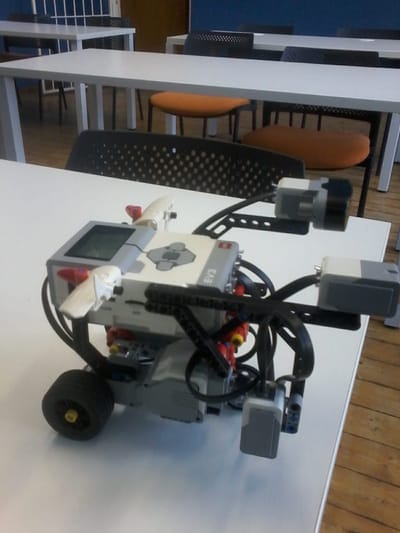
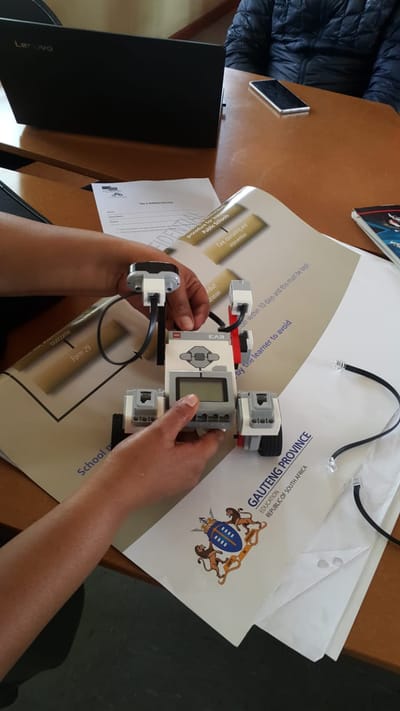
What is Robotics?
Robotics is the branch of technology that deals with the design, construction, operation, and application of robots
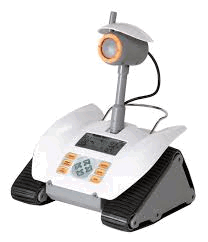
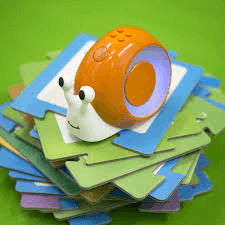
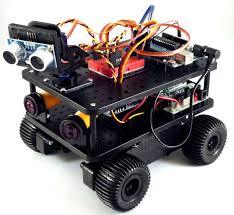
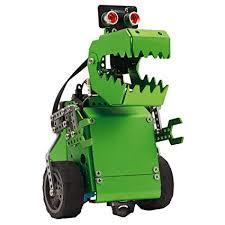
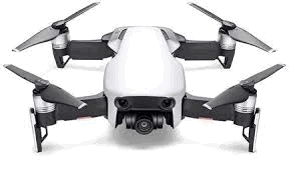
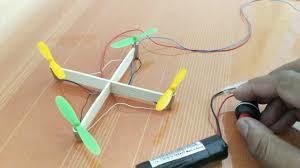
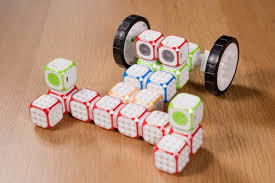
Examples are traffic lights, self-driving cars and drones We professionally train teachers or learners to build robots and easily program your robot to achieve problem-solving tasks/ missions Robots are widely used in factories to perform high-precision jobs such as assembling and exploring - both aerial and ground robots. Give your Robot a life so it can see, touch, move, talk , think and interact with the world by using simple coding!
Our Gallery
What is Coding?
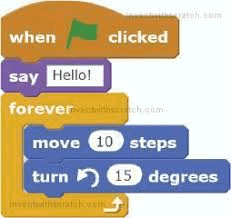
Coding is the writing of instructions using a programming language to tell a computer how to perform a given task or to solve a problem
(X)HTML teaches how the internet works & you can create interactive school websites for e-portfolios, e-surveys, e-assignments, e-homework, e-assessment, announcements, university application, e-reports - for learners Python is an easy future-oriented open source coding languages that we will utilise to start programming We develop computer programmes, mobile applications, websites and 3D printing Digital literacy is incorporated into all lessons for the absolute beginners in computers.
Meet the Team
![Rowlands Tsimba [CEO - Coding & Robotics]](https://images.cdn-files-a.com/uploads/11538496/800_5f539e7b600ca.png)
Rowlands Tsimba [CEO - Coding & Robotics]
Computer Science & Physics (UZ), Mathematics [CAPS] Teaching (Wits), MSc Entrepruership & Innovation (Salford Business School, UK), Assessor & Moderator (Skills Dynamics), Robotics Programming & Debugging (SLP), SMART Facilitator & Technical Specialist (Vastratech), Robotics Certified Judge (FLL), Train-the-Trainer (certified), Curriculum policy maker, Materials Development & Editor Sci-bono Discovery Centre (Maths & Science Intervention Coordinator), Microsoft (MCAS, MOS, PiL), (X)HTML, N+, Python, C++, Java, Muvizu CartoonMaker, SketchUp, VideoScribe, 3D-Printing; Coding & Robotics Specialist (GDE, Mgslg, Emeritus, SciMat, GCT, Lutramark, TEN, DeBeers). Wrote a Research paper on 'Destroying the Fear of Technology in Teaching (2018)'
![Hloniphani Dube [COORDINATOR - Coding]](https://images.cdn-files-a.com/uploads/11538496/800_5f52ca432752a.jpg)
Hloniphani Dube [COORDINATOR - Coding]
More than 20 years working in industry and academia. He holds a BSc Physics. Hloniphani has been working in teacher development since 2010 having worked for Sci-Bono Teacher Development Program for Maths and Sciences. He worked as a Facilitator/Instruction Coach for the Gauteng Department of Education from 2012 to 2017 specialising in Mathematics under Mathew Goniwe School of Leadership and Governance. Hloniphani was the Coding and Robotics Facilitator working under Mathew Goniwe to help launch Coding & Robotics programs in Python, C++ at St Barnabas and UJMA in 2019. He has helped schools in the Eastern Cape, North West, Gauteng, KZN and the Free State accomplish high pass rates and better grades through sharing methodologies to deal with misconceptions in Physical Science and Mathematics. Currently he works in artificial intelligence. He is currently building a machine learning solution to automate geospatial analysis and cloud computing in Education.
![Sarah Shange [Programmes Manager - ICT & Coding]](https://files.cdn-files-a.com/uploads/11538496/800_69606b4327578.jpg)
Sarah Shange [Programmes Manager - ICT & Coding]
Passionate about how people learn, having a background in the GDE programmes working with learners and parents from disadvantaged communities. Skilled in IQ, Smart, Microsoft Suite, Google Apps, OERs, Kahoot, GoFormative, Scratch, Arduino, Python packages to support and create positive learning environments at school, home and outside. I have experience and qualifications as an ICT facilitator, Coding and also in project management. I am currently pursuing studies in robotics pedagogy at UNISA.
4IAfricaRobotics in Education
Why are we embarking on this initiative?
To develop learners’ skills and competencies to prepare them for the Fourth Industrial Revolution (4IR.) Coding will expose learners to Computational Thinking -> critical thinking (high on Bloom’s Taxonomy) Exposes teachers to an enabling professional network Robotics introduces learners to possible career paths & opportunities they may never have considered
Fourth Industrial Revolution (4IR.) Coding
How will this program improve the level of education?
Encourages practical learning - problem-solving based Raises the level of rigor, enabling learners to start and complete projects Students feel free to interact with electrical and mechanical processes Teachers gain experience, get motivated, improving quality of education Robotics enables teachers to build creative tools by exploring concepts that industry uses Playful learning entails meaningful, engaging, iterative, prototyped and socially interactive tasks for young minds
The coding of any successful robot involves the integration of many different disciplines - subjects
Science
Measurement, Amplitude and Frequency, Light and Reflectivity, Graph model, Ultrasonic Waves, Speed, Sound, Heat, Distance & Power, Hypothesis & Evidence, Experimental Design, Observations, Data Analysis
Maths
Distance, Time, Diameter, Circumference, Angles, Graphs & Tables, Averages, Functions, Scaling, Logic, Patterns
Technology
Mechanical and Electrical systems, Design Process, Structures, Technology Society and the Environment
Languages
Brainstorming, Discussion, Composition (Explanatory), Communication, Debate & Argumentation, Interpersonal Skills, Report writing
Arts
Aesthetics, Concept ideas, Abstraction, Architecture and Graphics (3D)
Economics
Ratios & Proportions, Unit Conversion, Budget, Efficiency, Accounting - on Big Data
Geography
Mapping, Landscaping, Exploration, GPS
Social Sciences
History of Mankind & Machines, Impact of Robotics on Jobs, Positive effects on Health, Domestic, Industrial, Military, Banking, Relationships
Design Thinking Approach
Teachers are trained to lead students through the complete process of Research, Debrief, Plan, Design, Procure, Build, Test and Debug their own robots thus taking ownership of their learning
Powerful way to approach problems in a real world !
What we'll do
What is this program hoping to achieve in South Africa?
WHAT ROBOTICS WILL ACHIEVE IN RSA
The Game-changing initiative!
Learners code real life with moving robots, flying drones and more! Hands-on approach will enable learners to master simple robotics engineering Practical scaffolding of concepts leads students to apply it in Artificial Intelligence Gives an UNFAIR ADVANTAGE to students going into tertiary and industry
Frequently asked questions
“Personally, I’m always ready to learn, although I do not always like being taught”
- Winston Churchill
Robotics and Coding being totally learner-centred, affords learners to discover their own learning.
Contact us
- 90 Anderson Street, Marshalltown, Johannesburg, South Africa
- 24 - 7